
Selling your home, or selling to a developer
On many detached lots, the land is worth more to a builder than the house is to a family. Before we set a price, I'll show you what each type of buyer is likely to pay.
A free home valuation is useful whether you sell next month or in three years.
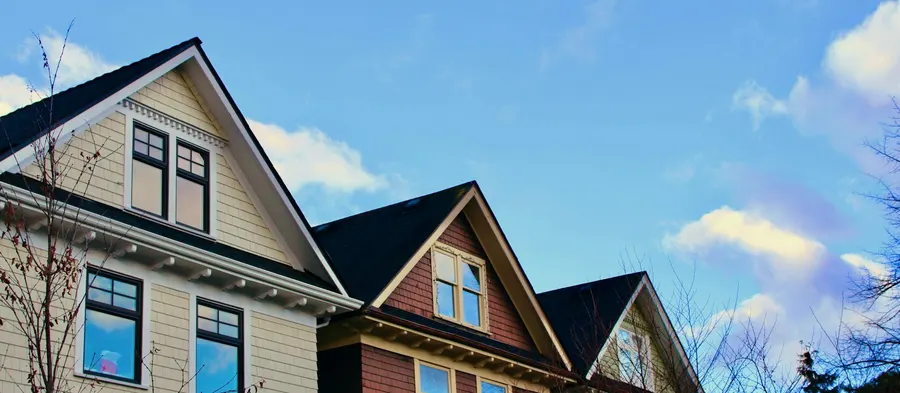
What a developer will pay for your house
Builders work out a lot's value backwards. They start from what the finished units will sell for, then subtract construction costs, soft costs and their profit. What's left is what they can pay you.
Two lots on the same street can be worth very different amounts to a builder.
The inputs that move that number most
- Lot width and area
- Lane access
- The zoning and which city you're in
- Trees and slope
- Servicing, such as sewer and water connections
Two ways to sell
To a family
Priced against recent home sales nearby, and marketed on the house itself: the layout, the condition and the schools.
To a builder
Priced on what the land allows, and marketed directly to the builders and developers I work with as well as on MLS®. Builders often ask for longer subject periods to confirm what they can build, and many will agree to a later completion date or a rent-back.
When a lot qualifies, I market it to both groups at once, so the offers tell you which one pays more.
Listing marketing
- Professional photography and cinematic video
- A listing narrative written for your most likely buyer
- MLS®, REW and featured placement on this site
- English and Chinese campaigns on Instagram, Facebook, WeChat and RedNote
- Private previews for builders when the lot has development potential
Builders receive the facts they need to decide quickly: lot dimensions, zoning, servicing and a rough buildable area.
What selling costs
Commission plus GST, legal or notary fees, your mortgage payout and any prepayment penalty, and strata move-out fees where they apply. Before you list, I'll give you an estimate of what you'll walk away with, so there are no surprises at completion.
Seller tips
Before you list
- Pick your priority. Top price, certainty, or timing. You can usually have two of the three.
- Sell first or buy first. In a slower market, sell first or make your purchase subject to your sale. Bridge financing costs real money.
- Know what a builder would pay for your lot. Under multiplex zoning your land can be worth more than your house, and I market to both buyer groups.
- Gather documents now. Permits for past renovations, oil tank removal records, survey or plans, and strata documents. Missing paperwork is a common reason deals stall at subject removal.
- Consider a pre-listing inspection on older homes. You find the issues on your own terms, fix or disclose them, and avoid being renegotiated after the buyer's inspection.
Prep: spend where it pays
- Worth the money: neutral paint, a deep clean and clean windows, matching light bulbs, a trimmed yard, and fixing small visible flaws like dripping taps and cracked tiles. Buyers assume a small flaw means bigger hidden ones.
- Usually not worth it: a kitchen renovation or new flooring right before selling. You rarely get the cost back.
- Pack away half your belongings. Half-empty closets make storage look generous. Take down family photos.
- Photo day checklist: every light on, blinds at the same height, toilet lids down, cars out of the driveway, pets away for the day.
Pricing
- Your first 2 to 3 weeks bring the most buyers. Overpricing wastes them.
- Price against today's competition, not a neighbour's sale at the peak.
- Mind the search brackets. Buyers filter at round numbers like $1.8M or $2M. A home listed at $2,010,000 drops out of every search capped at $2M.
- Review pricing strategy regularly to stay on top of the market.
Offers
- Only use an offer date if you expect competition. Otherwise the listing looks stale when the date passes with nothing.
- Compare offers on net proceeds and certainty. A slightly lower clean offer with a big deposit can beat a higher one full of subjects.
- Keep backup buyers warm. A buyer can still walk away within 3 business days of acceptance.
- Disclose what you know. An honest property disclosure statement is your best protection against a lawsuit after closing.
Taxes and money
- Report the sale of your principal residence on your tax return, even though it is tax-free.
- Owned for less than 2 years? The BC home flipping tax and the federal 12-month rule may apply. Talk to your accountant before you list.
- Non-resident sellers need a CRA clearance certificate, or the buyer's lawyer will hold back part of your proceeds.
- Ask your lender for your mortgage penalty now, and whether you can port the mortgage to your next home.
Moving out
- Label every key and leave the buyer a one-page house guide: water shut-off, electrical panel, mailbox key, garage and storage locations.
- Cancel utilities and insurance effective the completion date, not before. Photograph each meter reading on your way out.
Find out what your home is worth, to a family or a builder
Send me your address. Within 48 hours I'll email you a one-page valuation: what a family would likely pay, and whether a builder would pay more under the multiplex rules, with the unit count and rough buildable area behind that number.
No obligation to list. No automated emails. I'm the one who reads it.

Prefer WeChat? Scan, or search 778-668-8362.
Got it. I'll email your home valuation within 48 hours. If something about the property changes the picture, like a lane, a slope or an existing suite, I may text you one question first.